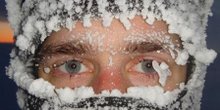
The Best 25 Hours In A Long Time
The Cliffs At Creek 4

exciting photos, this entry will be less about the base and more a self-indulgent Having finally caught up with writing about relief at length and including some not particularlyreminiscence of a spectacular day and a bit last weekend. Intentionally long on photos and short on words...
Late Evening Manhauling
Photo thanks to Rich Burt

Ant (Z-Chef) and I have wanted to travel by ski off-base for a while now. As exciting as travelling by ski-doo across miles of the Antarctic is, there is something particularly romantic and simple about travel under your own propulsion. A post-winter manhaul trip would not have been practical for various reasons and there has been little time or conditions amenable to do so safely at any other point.
Ice Cave Buried In the Cliffs

So the arrival of a ski-enthusiastic Field GA, an urge to get off-base and a Base Commander supportive of outdoor activities, we planned a trip to the only caboose off-station at the moment at Creek 4, where the cargo came off the sea ice. However, any trip further afield than a few kilometres off base requires a half-unit to be taken, either towed behind a ski-doo, lashed to the roof of a Sno-Cat or in our case manhauled.
Lashing the Manhaul Nansen

cooking stove and pans), a medical box, copious paraffin fuel (stored in A half-unit is essentially an emergency kit to allow survival for an extended period of time should bad weather descend. It consists of an emergency tent, a pots box (with a Primusjerry cans), P-bags (the sleeping bags and insulation for sleeping), manfood boxes (dried field food), along with a few other bits and pieces including rope and climbing gear. By not taking ski-doos we are able to avoid the large number of petrol jerrys and vehicle spares that would usually be carried and use a lighter Nansen sledge- a manhaul sledge- as opposed to the more robust versions that are designed to travel at greater speed. Along with all our personal kit, the whole thing came to about 150- 200kg between us, a lot for just a night away!
Heading Out Into the Bondoo

Having planned it since before relief, we felt it would be prudent to at least have a trial run before heading out across the shelf, around base. Several evenings were spent towing the cumbersome cross-country ski-track maker around the perimeter, playing with kit and the fan trace until we were all satisfied we were all pulling the same load, even if some arrangements seemed to defy our understanding of physics, and were happy with the skis and skins set up. (Skins are strips of either fur or artificial fibre glued to the bottom of the ski to provide extra traction)
In Training
L-R- Rich Burt, Ant and myself- photo thanks to Les Johnson

So last Saturday evening (the 19th), given that we are all working Saturday until late and Ant had the Saturday dinner to cook, serve and scrub the kitchen down after, we finished lashing our personal kit, donned manhaul harnesses and headed off base at about 9 at night. The benefit of 24-hour daylight, is that the illumination on the three hour trip or so hours down to the coast means even at midnight, that there is no need for torches and sunglasses are mandatory.
The White Cliffs of the Brunt

The total weight of the sledge may seem heavy but on a well-maintained Nansen (with thanks to Alex Gough- who gave them some much needed attention during the winter), running over a near perfect surface (hard ice base with a light snow cover), and with three of us hauling the time passed rapidly and sociably strung out in a line ahead of the sledge. The 14 kilometres or so passed fast and the sun was dipping low by the time we arrived at the caboose; a few weeks yet and the sun should set once more. The persistently photogenic altocumulus was illuminated such that you felt you could reach out drag yourself up and peer across the cloud tops.
Nearing the Caboose
Photo by Rich Burt

After a very comfortable nights sleep in the familiar caboose that has been moved to the head of the creek from its old site at Windy Bay, we sprang out early, radioed into base for our field sched and roped up for a walk out onto one of the headlands. Despite the ambient temperature of -10°C or so, the sun was out and there can have been few more beautiful places on earth.
Walking Out On the Headland
Roped up in case of crevasses

Rich had reconnoitred, during his time working off the Shackleton during relief, a safe cliff (free from overhangs and cornices), for some abseiling and climbing about a kilometre or two from where the Anderma had tied up. After setting up the anchor, I headed off over the edge first, abseiling the forty or so metres off the ice shelf down to the sea ice beneath.
About to Go Over the Edge
Abseiling off the cliffs onto the sea ice, the open sea with pack ice only a hundred metres or so away- photo by Rich Burt

Until this point, it felt as we were alone in the middle of nowhere, no other living organism anywhere on the edge of this vast desert. Suddenly halfway down the cliff, it became clear that this was no longer true; a loud exhalation of air and a disturbance in the water revealed a pod of Orca swimming along the ice edge.
The Large Dorsal Fin of a Male Orca

That moment, suspended 20 metres in the air feet against a brilliant white ice cliff, with deep blue skies looking out over the sea and pack ice, without another human being in sight, interrupted only by my first sighting of Killer Whales, cannot be captured adequately in photographs or prose.
Adélie Penguins

The reason for the presence of these first non-human mammals I have seen in a year, soon became obvious as two small penguins waddled over inquisitively towards the foot of the cliff. Jokingly referred to as 'Jellys' for their small size and resemblance to Jelly Babies- at least to Orcas- Adélie penguins are the only other penguins along with Emperors that live off the Antarctic mainland and these were the first I had seen since South Georgia.
Ant Abseiling

The pod continued swimming lazily along the ice edge, they are brought in by the abundance of both types of penguin around the sea ice, either moulting adults or young heading off into open water for the first time. Adélies form the perfect snack- though this pair were still wandering around the ice when we left later in the day.
Rich Burt Ice Climbing

Ant after a few minutes of watching the Orca followed me down and then Rich. I have never been a climber yet BAS is replete with those who get kicks out of climbing rock, ice, whatever. It is not something I have been able to understand or empathise with the stories- until now.
Still a Long Way to Go

After an exhilarating climb back up the face, we headed back to the caboose to rendez-vous with four people who had turned up by Sno-Cat from base for an afternoon's climbing.
JD Stops to Admire the View

The whole area is particularly photogenic, all the more so on a bright sunny day. The other appreciable aspect is the lack of noise. Even on a base in the middle of nowhere there is still the continual hum of a generator in the background with the drone of ski-doos and large vehicles super-imposed at the more noisy times.
Vicky (Z-Base Commander) Mid Abseil

The same is not true at the creeks, the difference in the intensity of the silence is appreciable, even if it is punctuated by the occasional snort of an orca or the distant creaking of pack ice rubbing together.
Working the Lens
Jim abseiling on the left, I am on the right- photo thanks to Dean Evans

In order to try and get some quality shots, we put in another snow anchor and I abseiled down to try and catch everybody on their way past, against the stunning cliffs.
Female Orcas

Using crampons and dynamic ice axes while belayed from above for the inevitable fall, the climb back up was as exciting as the abseil down, admittedly without the view apart from a large wall of ice.
JD Heads Back Up

Hanging onto ice axes often pitched above head height, led to cold numb hands, such that on reaching the top, there was an opportunity to revisit the pain associated with colder days as the hands re-warmed followed by the waves of nausea that accompany profound re-perfusion.
Watching From the Bottom
Vicky, Ant and Jim contemplate the climb back up

Dean and Jim were particularly glad for a chance to go climbing as their winter trips had been particularly badly affected by bad weather, spending their first trip almost entirely within their pyramid tents., while for the second trip they were confined inside Windy Caboose in the midst of 60+knot winds until the last day.
Deano Heads Back Down Again

After a good afternoon's climbing, we roped up again and headed back to the caboose. The Sno-Cat was quickly loaded and the four headed back to base.
Roped Up
An unusual Alpine 7

I am sure each of the three of us left behind must have thought for thirty seconds about throwing all the kit in the back of the 'Cat and taking the easy route home, particularly after a good day's climbing. The trip back however was just as good as the trip out.
Improvising Repairs to Ant's Skis

The Antarctic is beautiful, even those who deride the Brunt for its bleak flatness and lack of mountains could not help but appreciate its desolate beauty. A beauty all the more inspiring when viewed leisurely on skis than on the back of a noisy ski-doo. Despite a few problems with Ant's skins losing their grip with the skis, we were back on base by 10 that night. an eventful 25 hours after we left.
Back On Base
Ant (L) and I (R) power the last mile home- photo by Rich Burt

I am incredibly fortunate to be able to spend a weekend in such a way and it is weekends like this that I am sure I will look back on with the most fondness and excitement. What more could you want, great company, weather, orcas, climbing and manhauling? There is little that I can think of more captivating that skiing unaided across the Antarctic, a method of travel that is all the more exciting for its echoes of early polar travel a century ago.
Ant Descends the Cliffs


exciting photos, this entry will be less about the base and more a self-indulgent Having finally caught up with writing about relief at length and including some not particularlyreminiscence of a spectacular day and a bit last weekend. Intentionally long on photos and short on words...
Late Evening Manhauling
Photo thanks to Rich Burt

Ant (Z-Chef) and I have wanted to travel by ski off-base for a while now. As exciting as travelling by ski-doo across miles of the Antarctic is, there is something particularly romantic and simple about travel under your own propulsion. A post-winter manhaul trip would not have been practical for various reasons and there has been little time or conditions amenable to do so safely at any other point.
Ice Cave Buried In the Cliffs

So the arrival of a ski-enthusiastic Field GA, an urge to get off-base and a Base Commander supportive of outdoor activities, we planned a trip to the only caboose off-station at the moment at Creek 4, where the cargo came off the sea ice. However, any trip further afield than a few kilometres off base requires a half-unit to be taken, either towed behind a ski-doo, lashed to the roof of a Sno-Cat or in our case manhauled.
Lashing the Manhaul Nansen

cooking stove and pans), a medical box, copious paraffin fuel (stored in A half-unit is essentially an emergency kit to allow survival for an extended period of time should bad weather descend. It consists of an emergency tent, a pots box (with a Primusjerry cans), P-bags (the sleeping bags and insulation for sleeping), manfood boxes (dried field food), along with a few other bits and pieces including rope and climbing gear. By not taking ski-doos we are able to avoid the large number of petrol jerrys and vehicle spares that would usually be carried and use a lighter Nansen sledge- a manhaul sledge- as opposed to the more robust versions that are designed to travel at greater speed. Along with all our personal kit, the whole thing came to about 150- 200kg between us, a lot for just a night away!
Heading Out Into the Bondoo

Having planned it since before relief, we felt it would be prudent to at least have a trial run before heading out across the shelf, around base. Several evenings were spent towing the cumbersome cross-country ski-track maker around the perimeter, playing with kit and the fan trace until we were all satisfied we were all pulling the same load, even if some arrangements seemed to defy our understanding of physics, and were happy with the skis and skins set up. (Skins are strips of either fur or artificial fibre glued to the bottom of the ski to provide extra traction)
In Training
L-R- Rich Burt, Ant and myself- photo thanks to Les Johnson

So last Saturday evening (the 19th), given that we are all working Saturday until late and Ant had the Saturday dinner to cook, serve and scrub the kitchen down after, we finished lashing our personal kit, donned manhaul harnesses and headed off base at about 9 at night. The benefit of 24-hour daylight, is that the illumination on the three hour trip or so hours down to the coast means even at midnight, that there is no need for torches and sunglasses are mandatory.
The White Cliffs of the Brunt

The total weight of the sledge may seem heavy but on a well-maintained Nansen (with thanks to Alex Gough- who gave them some much needed attention during the winter), running over a near perfect surface (hard ice base with a light snow cover), and with three of us hauling the time passed rapidly and sociably strung out in a line ahead of the sledge. The 14 kilometres or so passed fast and the sun was dipping low by the time we arrived at the caboose; a few weeks yet and the sun should set once more. The persistently photogenic altocumulus was illuminated such that you felt you could reach out drag yourself up and peer across the cloud tops.
Nearing the Caboose
Photo by Rich Burt

After a very comfortable nights sleep in the familiar caboose that has been moved to the head of the creek from its old site at Windy Bay, we sprang out early, radioed into base for our field sched and roped up for a walk out onto one of the headlands. Despite the ambient temperature of -10°C or so, the sun was out and there can have been few more beautiful places on earth.
Walking Out On the Headland
Roped up in case of crevasses

Rich had reconnoitred, during his time working off the Shackleton during relief, a safe cliff (free from overhangs and cornices), for some abseiling and climbing about a kilometre or two from where the Anderma had tied up. After setting up the anchor, I headed off over the edge first, abseiling the forty or so metres off the ice shelf down to the sea ice beneath.
About to Go Over the Edge
Abseiling off the cliffs onto the sea ice, the open sea with pack ice only a hundred metres or so away- photo by Rich Burt

Until this point, it felt as we were alone in the middle of nowhere, no other living organism anywhere on the edge of this vast desert. Suddenly halfway down the cliff, it became clear that this was no longer true; a loud exhalation of air and a disturbance in the water revealed a pod of Orca swimming along the ice edge.
The Large Dorsal Fin of a Male Orca

That moment, suspended 20 metres in the air feet against a brilliant white ice cliff, with deep blue skies looking out over the sea and pack ice, without another human being in sight, interrupted only by my first sighting of Killer Whales, cannot be captured adequately in photographs or prose.
Adélie Penguins

The reason for the presence of these first non-human mammals I have seen in a year, soon became obvious as two small penguins waddled over inquisitively towards the foot of the cliff. Jokingly referred to as 'Jellys' for their small size and resemblance to Jelly Babies- at least to Orcas- Adélie penguins are the only other penguins along with Emperors that live off the Antarctic mainland and these were the first I had seen since South Georgia.
Ant Abseiling

The pod continued swimming lazily along the ice edge, they are brought in by the abundance of both types of penguin around the sea ice, either moulting adults or young heading off into open water for the first time. Adélies form the perfect snack- though this pair were still wandering around the ice when we left later in the day.
Rich Burt Ice Climbing

Ant after a few minutes of watching the Orca followed me down and then Rich. I have never been a climber yet BAS is replete with those who get kicks out of climbing rock, ice, whatever. It is not something I have been able to understand or empathise with the stories- until now.
Still a Long Way to Go

After an exhilarating climb back up the face, we headed back to the caboose to rendez-vous with four people who had turned up by Sno-Cat from base for an afternoon's climbing.
JD Stops to Admire the View

The whole area is particularly photogenic, all the more so on a bright sunny day. The other appreciable aspect is the lack of noise. Even on a base in the middle of nowhere there is still the continual hum of a generator in the background with the drone of ski-doos and large vehicles super-imposed at the more noisy times.
Vicky (Z-Base Commander) Mid Abseil

The same is not true at the creeks, the difference in the intensity of the silence is appreciable, even if it is punctuated by the occasional snort of an orca or the distant creaking of pack ice rubbing together.
Working the Lens
Jim abseiling on the left, I am on the right- photo thanks to Dean Evans

In order to try and get some quality shots, we put in another snow anchor and I abseiled down to try and catch everybody on their way past, against the stunning cliffs.
Female Orcas

Using crampons and dynamic ice axes while belayed from above for the inevitable fall, the climb back up was as exciting as the abseil down, admittedly without the view apart from a large wall of ice.
JD Heads Back Up

Hanging onto ice axes often pitched above head height, led to cold numb hands, such that on reaching the top, there was an opportunity to revisit the pain associated with colder days as the hands re-warmed followed by the waves of nausea that accompany profound re-perfusion.
Watching From the Bottom
Vicky, Ant and Jim contemplate the climb back up

Dean and Jim were particularly glad for a chance to go climbing as their winter trips had been particularly badly affected by bad weather, spending their first trip almost entirely within their pyramid tents., while for the second trip they were confined inside Windy Caboose in the midst of 60+knot winds until the last day.
Deano Heads Back Down Again

After a good afternoon's climbing, we roped up again and headed back to the caboose. The Sno-Cat was quickly loaded and the four headed back to base.
Roped Up
An unusual Alpine 7

I am sure each of the three of us left behind must have thought for thirty seconds about throwing all the kit in the back of the 'Cat and taking the easy route home, particularly after a good day's climbing. The trip back however was just as good as the trip out.
Improvising Repairs to Ant's Skis

The Antarctic is beautiful, even those who deride the Brunt for its bleak flatness and lack of mountains could not help but appreciate its desolate beauty. A beauty all the more inspiring when viewed leisurely on skis than on the back of a noisy ski-doo. Despite a few problems with Ant's skins losing their grip with the skis, we were back on base by 10 that night. an eventful 25 hours after we left.
Back On Base
Ant (L) and I (R) power the last mile home- photo by Rich Burt

I am incredibly fortunate to be able to spend a weekend in such a way and it is weekends like this that I am sure I will look back on with the most fondness and excitement. What more could you want, great company, weather, orcas, climbing and manhauling? There is little that I can think of more captivating that skiing unaided across the Antarctic, a method of travel that is all the more exciting for its echoes of early polar travel a century ago.
Ant Descends the Cliffs